
Press Release
3 November 2026
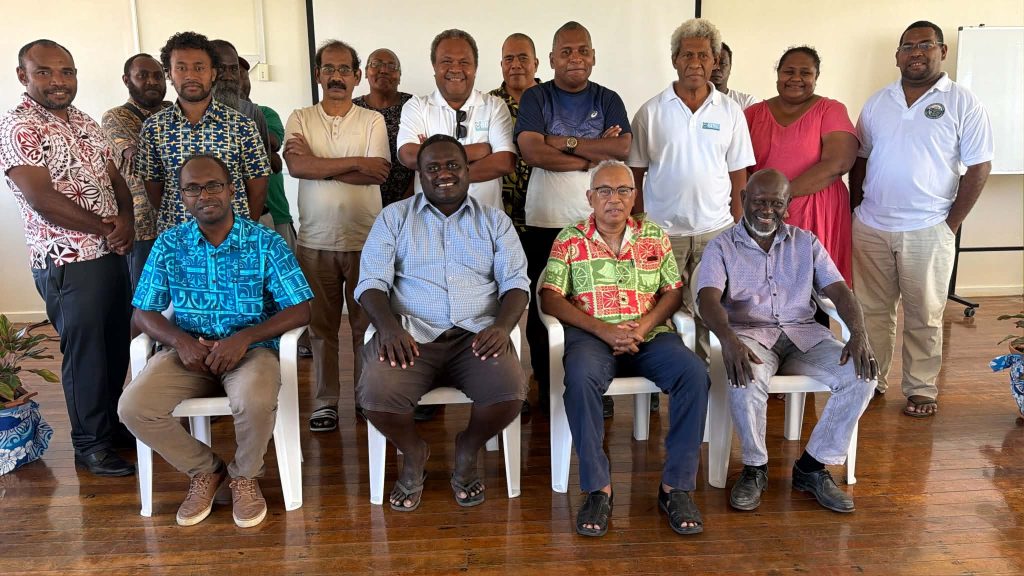
The Solomon Islands National University (SINU), through its Faculty of Science, Engineering and Technology (FSET), successfully hosted the FSET Research Dissemination Seminar 2026.
Held on Friday, 30 October 2026, at SINU’s Panatina Campus in Honiara, the seminar was organised under the theme, “Advancing Scientific Research, Innovation and Evidence-Based Solutions for Sustainable Development in SINU and Solomon Islands.”
The seminar provided an important platform for FSET academic staff and researchers to showcase their research findings, exchange scientific knowledge, strengthen professional networks and explore opportunities for interdisciplinary research collaboration.
The seminar aimed to strengthen research capacity and establish a sustainable research culture within FSET and SINU by empowering academic staff and students to undertake quality research, develop innovative solutions and contribute meaningfully to national development priorities.
The seminar featured nine research presentations covering important scientific, technological, environmental, agricultural and socio-economic development areas in the Solomon Islands. These included:
- Internet Connectivity and Digital Access: Surveying Internet Speed, Accessibility and Connectivity in the Solomon Islands, presented by John Waihuru, Timothy G. Kale, Dewin Alick and Wanderlyn Vahimana.
- Environmental Health and Water Quality: Assessing Heavy Metal Contamination in Freshwater Streams Around the Nickel Mine in Isabel Province, presented by Dickson Boboria and Timothy Aihunu.
- Plastic Pollution and Environmental Regulation: Beyond the Ban: Awareness, Enforcement and Socio-Economic Impacts of Solomon Islands’ Single-Use Plastic Ban Regulation, presented by Dr. Clyde Gorapava Puilingi and Ramanuja Rao Kotti.
- Climate Science and Predictive Analytics: Statistical Analysis of Climate Change and Meteorological Weather Predictions Using Smart Classifier Algorithms, presented by Timothy G. Kale and John Waihuru.
- Applied Mathematics and Urban Transport: Using Mathematical Models and Differential Equations to Mitigate Traffic Congestion in Honiara, presented by Bukah Misifea and Ramanuja Kotti.
- Renewable Energy and Community Development: Wind Nano-Grid for Five Communities Within and Around Honiara, presented by Michael Kuali.
- Marine Biodiversity and Ecosystem Assessment: Comparative Study of Starfish Population Density Along the Intertidal Zones of Honiara City and Blueflag/Visale, West Guadalcanal, presented by John Rofeta, Magreth Konata, Kevin Sese and Brenda Ramoi.
- Food Systems and Nutritional Resources: Assessing the Supply, Quality and Value of Green Leafy Vegetables, Fruits and Root Crops in Local Markets, presented by Merry Sailonga Faluaburu.
- Agricultural Research and Pest Management: Farmers’ Experiences and Management of Giant African Snails in Solomon Islands Gardens, presented by John Fasi, Lovelyn Otoiasi, Lawrence Atu, Moses Asitarau and George Horoasia.
These presentations demonstrated the diversity of research undertaken by FSET researchers and highlighted the importance of applying scientific knowledge, technology, mathematics and data analysis to address real-world challenges in the Solomon Islands.
Beyond showcasing research findings, the seminar also provided valuable learning and professional development opportunities, particularly for emerging researchers and academic staff.
It created opportunities for participants to:
- Learn the fundamentals of research and strengthen their research skills.
- Identify potential research topics and emerging areas of investigation.
- Gain valuable insights and experience from established researchers.
- Build confidence in conducting research and presenting scientific findings.
- Establish professional networks and explore research funding opportunities.
- Encourage interdisciplinary research collaboration and joint academic publications.
- Identify opportunities for follow-up investigations, future conferences and journal publications.
The seminar also provided an important opportunity for staff and students to engage with active research activities, develop scientific curiosity, strengthen critical thinking and appreciate the contribution of research to knowledge creation and national development.
Most importantly, the seminar contributes to nurturing a strong and sustainable research culture within FSET and SINU, preparing academic staff to become more confident, innovative, collaborative and productive researchers. This will strengthen the university’s capacity to generate knowledge, provide evidence-based solutions and contribute to the sustainable development of SINU and the Solomon Islands.
Speaking at the conclusion of the seminar, Associate Dean Research (FSET-ADR), Dr. Timothy Girry Kale, expressed his sincere appreciation to all presenters, research teams, academic staff and colleagues for their commitment and contributions towards making the seminar a success.
Dr. Kale acknowledged the excellent and diverse research topics presented, noting that all presentations were informative, relevant and encouraging. He emphasised that the research demonstrated the growing potential of FSET academic staff to contribute to scientific knowledge and address important national development challenges.
He strongly encouraged all SINU research staff and FSET colleagues to continue improving their research, undertake further investigations and follow-up studies based on their findings, and work towards presenting their research outcomes at future national and international conferences.
He also encouraged researchers to develop their findings into quality academic papers and pursue publication opportunities in reputable academic journals.
Furthermore, he emphasised that research dissemination should not end with seminar presentations but should become a continuous process of scientific investigation, knowledge sharing, collaboration and academic publication.
In the meantime, Director Office of Research and Postgraduate Studies Associate Professor Dr Hugo Bugoro, thanked all presenters for what he described as well-prepared and highly scientific presentations.
“It was really pleasing to note that all presentations were scientific, evidence-based and very applied.”
“Research of this kind is especially important at present, as its results can be put to immediate use in solving current problems.”
“I fully appreciate the preparation and effort that the FSET team put into hosting the seminar. It will be useful to build on this momentum, and the Office of Research and Postgraduate Studies looks forward to continuing to support FSET in strengthening its research culture.”
ENDS//