
Press Release
16 March 2026
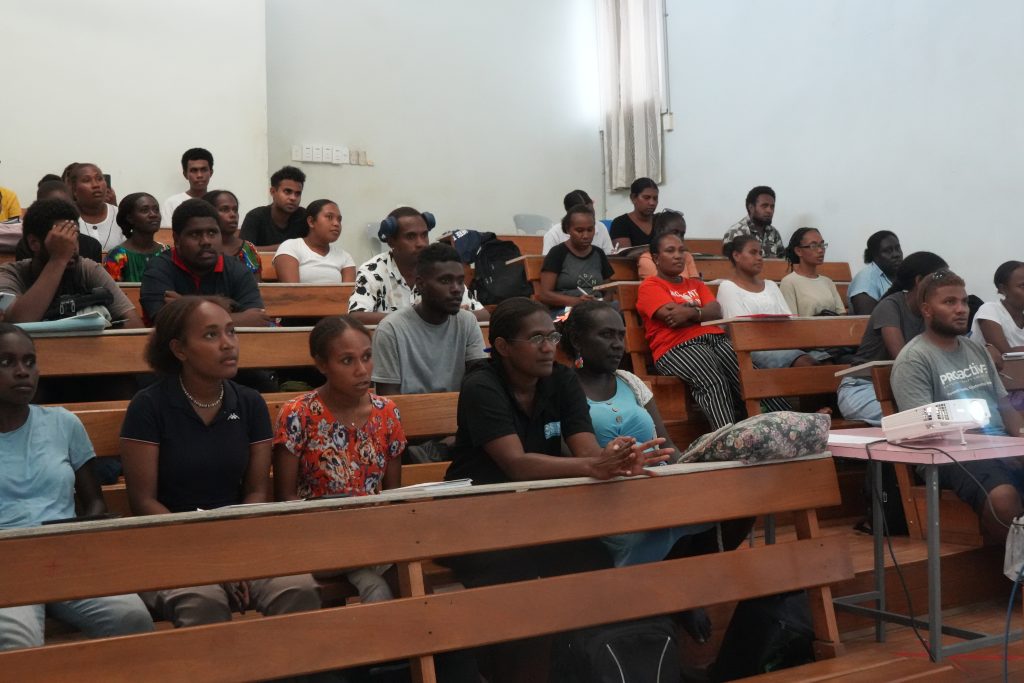
The Solomon Islands National University (SINU) is seeing growing interest in its Japanese language programme, with 229 students currently enrolled in Japanese Introductory 1 and Japanese Introductory 2 classes this semester.
The classes were first introduced in August last year through a dispatch arrangement with the Japan International Cooperation Agency (JICA), following a request from the University to expand language learning opportunities. Initially, the programme was offered exclusively to SINU staff and students, but it has now been extended to members of the public, allowing everyone to participate free of charge.
The programme provides participants with the opportunity to learn conversational Japanese, while also gaining insight into Japanese culture, manners, and ways of thinking. While the classes do not carry university academic credit, students who successfully complete the required coursework will earn a certificate of completion
Japanese language instructor Miss Naomi Shinagawa said the programme aims to encourage cultural exchange while creating meaningful opportunities for students and the wider community.
“I hope these classes will give students a chance to explore Japanese language and culture, support the tourism industry, and open opportunities for study, work, or training in Japan,” Miss Shinagawa said.
She added that although enrolment for this semester has closed, the classes will continue, and she looks forward to welcoming more students in the future.
Plans are also underway to introduce a new course titled “Japanese for Tourism” next semester, focusing on practical Japanese language skills for the hospitality and tourism industry.
All classes began during the week of 9 March and are held at the School of Tourism and Hospitality Management (STHM) at SINU.
Learning Japanese provides students and the public with valuable skills that can support career opportunities in tourism, hospitality, education, and international exchange.
ENDS//