
𝐏𝐫𝐞𝐬𝐬 𝐑𝐞𝐥𝐞𝐚𝐬𝐞
𝟏𝟕 𝐃𝐞𝐜𝐞𝐦𝐛𝐞𝐫 𝟐𝟎𝟐𝟓
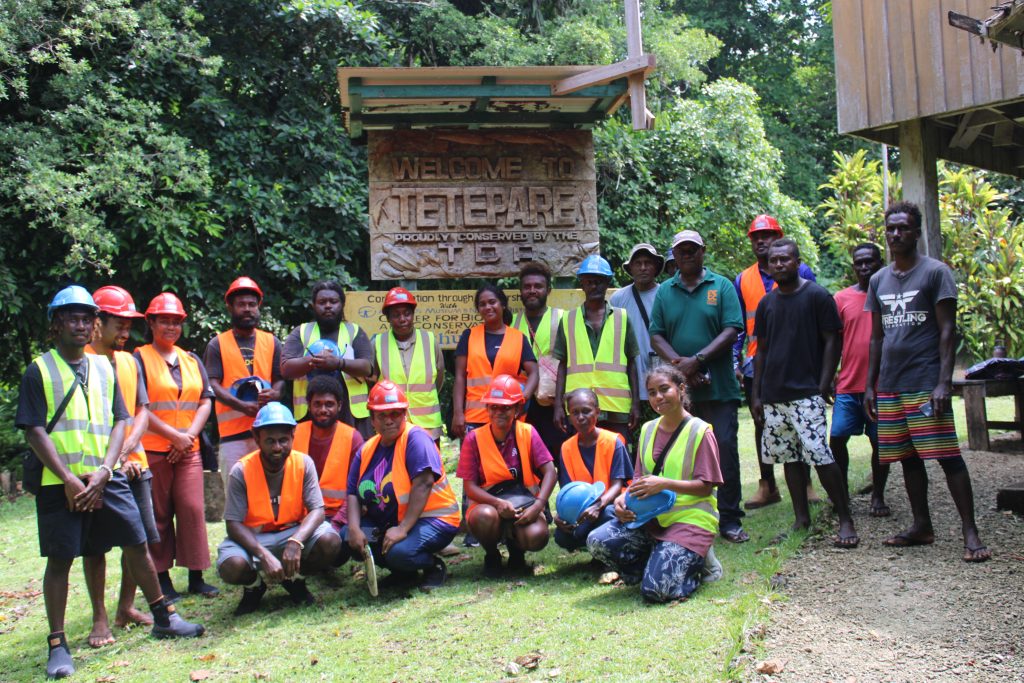
From 5th December to 14th December 2025, a cohort of 16 Bachelor of Environmental Studies students, six 2nd‑year and ten 3rd‑year, from the Faculty of Agriculture, Fisheries & Forestry (FAFF) at the Solomon Islands National University (SINU) successfully concluded a ten‑day field immersion on Tetepare Island, delivering a comprehensive suite of socio‑economic and ecological assessments that underscore the island’s world‑class conservation value. Over the first days, participants conducted a community socio‑economic survey to capture local perspectives on the Tetepare conservation project, followed by terrestrial ecosystem assessments that documented the island’s flora, biodiversity, traditional uses and ecosystem services. Subsequent tree‑species surveys mapped changes in coastal and inland species composition and abundance, highlighting the dynamic contour‑line landscapes.
The team was led by Head of Department Dr Mary Tahu Paia, Lecturers Ms Lovelyn Otoiasi and Mr Steve Tahunipue, Dean Dr Vaeno Wayne Vigulu and the nation’s botanist Mr Myknee Sirikolo, partnered with the Tetepare Descendants’ Association (TDA), the community‑run conservation body that manages the island’s pristine rainforests and reefs.
Over the course of the visit, students conducted systematic terrestrial ecosystem assessments at the Tetepare field station, cataloguing floral species, documenting traditional uses and evaluating ecological benefits. Subsequent days were devoted to coastal and inland tree‑species surveys, which highlighted shifts in species composition and abundance across the island’s varied topography.
A highlight of the trip was the intensive work at the Tofa turtle‑nesting beach, where marine rangers and students braved rough seas and heavy rain to monitor the three turtle species that breed on Tetepare – green, hawksbill and the critically endangered leatherback. The students observed the operation of a predator‑exclusion hatchery that safeguards eggs and hatchlings from monitor lizards and other threats, reinforcing the island’s ongoing turtle‑conservation program.
During the final day, students presented their findings and reflections, praising Tetepare’s pristine waters, rich biodiversity and the hospitality of the TDA field‑station staff.
The Faculty of Agriculture Forestry and Fisheries of Solomon Islands National University extends special thanks to Mr Myknee Sirikolo for his expert guidance on flora and fauna identification, and to the Tetepare Descendants’ Association (TDA) for outstanding logistics, sea transport and accommodation. Looking ahead, FAFF is currently negotiating a Memorandum of Understanding with TDA to formalize annual biodiversity assessments on Tetepare and to expand field programmes to additional hotspots across the Solomon Islands. This partnership underscores a shared commitment to preserving Tetepare’s pristine ecosystems for future generations.
ENDS//