
𝐏𝐫𝐞𝐬𝐬 𝐑𝐞𝐥𝐞𝐚𝐬𝐞
𝟏𝟑 𝐀𝐮𝐠𝐮𝐬𝐭 𝟐𝟎𝟐𝟔
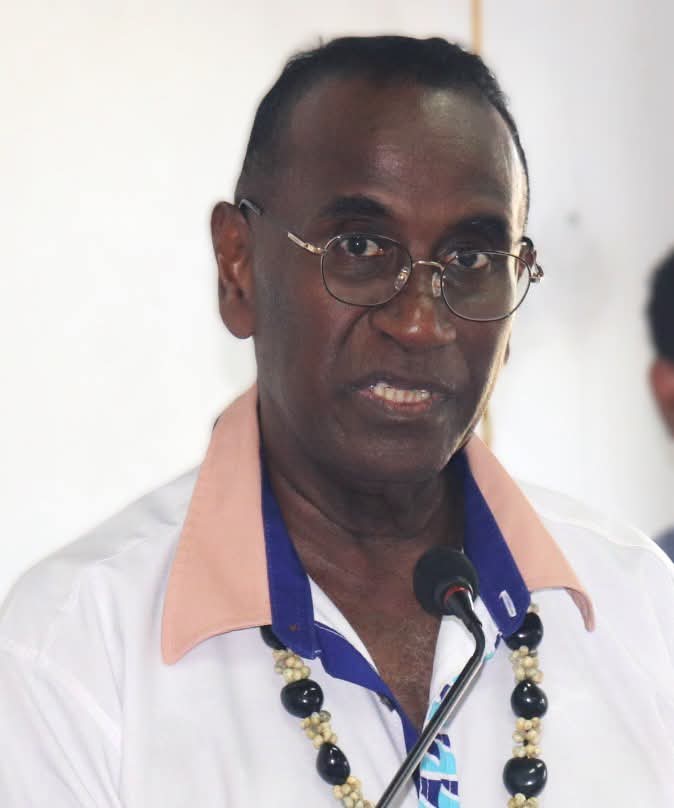
Solomon Islands National University (SINU) Vice-Chancellor, Professor Transform Aqorau, delivered the keynote address at the WWF-Pacific Leadership Team Retreat held at Heritage Park Hotel in Honiara on Monday, 10 August 2026.
Speaking on the theme, “Pacific Leadership, Ocean Governance and Focused Impact to 2030,” Professor Aqorau urged Pacific leaders and conservation organisations to focus their efforts on initiatives that strengthen community ownership, build lasting institutions and deliver measurable benefits for Pacific people and the environment.
He said effective leadership requires more than identifying priorities—it demands difficult choices about what matters most and the discipline to translate shared aspirations into practical systems, institutions and sustainable financing.
“The real test of leadership is whether we can decide what matters most, organise around it, and stay the course long enough to make a measurable difference,” Professor Aqorau said.
Drawing on his experience with the Parties to the Nauru Agreement (PNA), Professor Aqorau explained how Pacific Island countries transformed the management and economic value of their tuna resources through collective action, clearly defined rights, enforceable limits and strong regional institutions.
He highlighted the Vessel Day Scheme as an example of conservation and economic development working together. By limiting fishing effort and strengthening the bargaining power of Pacific Island countries, the scheme substantially increased fisheries access revenue while supporting public services, infrastructure and institutional development across the region.
Professor Aqorau also presented the proposed Ontong Java Beche-de-Mer Authority as a potential new model for community-led conservation and development in Solomon Islands.
Under the proposal, a community-majority statutory body would bring together fisheries management and commercial capability. Scientific stock assessments, precautionary quotas, community monitoring, quality control, processing, branding and transparent marketing would help protect the fishery while ensuring that a greater share of its value remains with the people of Ontong Java.
“The people own the resource, but they do not own the business built around it,” Professor Aqorau said. “Conservation can be the foundation of community wealth, dignity and resilience when rights, incentives, institutions and leadership point in the same direction.”
He stressed that any such model must be supported by transparent pricing, independent audits, conflict-of-interest safeguards, public reporting and genuine participation by the communities of Pelau and Luaniua, including women and young people.
Addressing WWF-Pacific’s priorities to 2030, Professor Aqorau encouraged the organisation to focus on changing systems rather than delivering isolated activities; make locally led conservation an operating principle; invest in enduring Pacific institutions; and bring communities, scientists, lawyers, businesses, governments and universities together around shared outcomes.
He emphasised that universities have an important role in testing ideas, strengthening evidence, developing policy solutions and preparing the next generation of Pacific leaders.
Professor Aqorau concluded by calling for a future in which Pacific communities move from being price takers to empowered rights-holders, with greater control over their resources and the benefits they generate.
“Our islands may be small, but our ocean is vast. Our resources may be vulnerable, but our ideas need not be timid,” he said.
The WWF-Pacific Leadership Team Retreat brought together regional leaders to reflect on WWF-Pacific’s achievements, challenges and strategic priorities, and to identify areas where the organisation can deliver its greatest impact for Pacific people and nature by 2030.
#SINU #WWFPacific #PacificLeadership #OceanGovernance #LocallyLedConservation #BlueEconomy #SolomonIslands
ENDS//