
𝐏𝐫𝐞𝐬𝐬 𝐑𝐞𝐥𝐞𝐚𝐬𝐞
𝟑𝟎 𝐉𝐚𝐧𝐮𝐚𝐫𝐲 𝟐𝟎𝟐𝟔
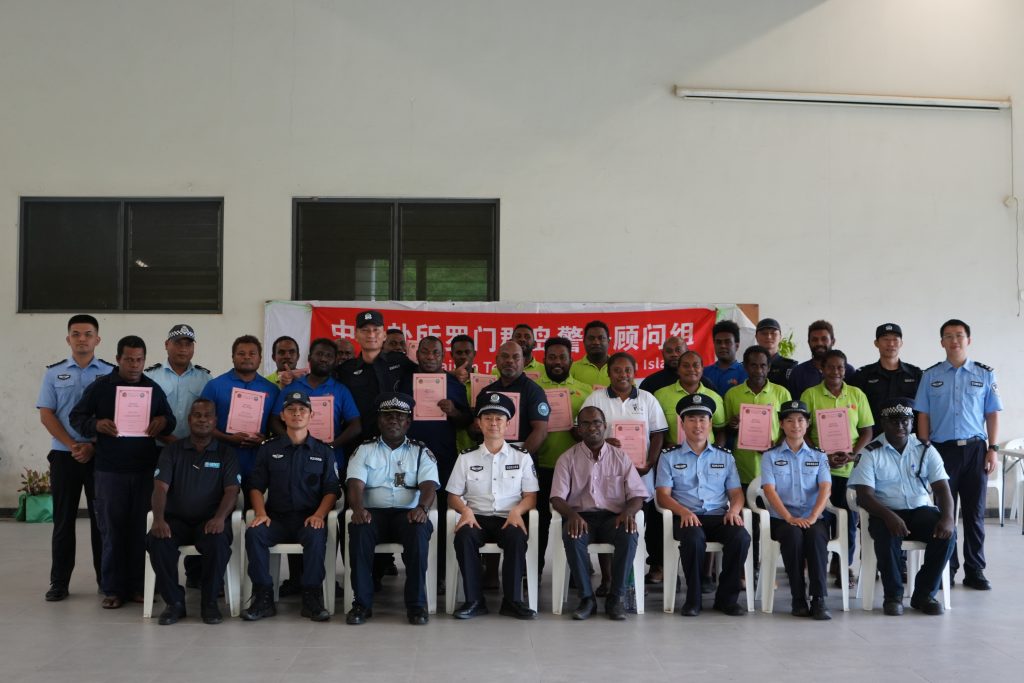
The Solomon Islands National University (SINU) marked the successful conclusion of an intensive one-week Security Training Program for its security personnel on Tuesday, 27 January. Participants received certificates upon completing the program, which strengthened both their theoretical knowledge and practical skills essential for today’s complex security environment.
The program covered core security functions as well as essential competencies in basic first aid, disaster risk reduction, and emergency preparedness.
Present at the closing ceremony were Chinese Police Liaison Team (CPLT) Commissioner Mr. Liu Shenghuang; Royal Solomon Islands Police Force (RSIPF) Acting Deputy Commissioner Mr. Simpson Pogeava; and members of both the CPLT and RSIPF.
On behalf of SINU Vice-Chancellor and Senior Management, Dr. Clyde Puilingi, Dean of the Faculty of Science and Technology, congratulated the graduates on their commitment, discipline, and effort throughout the training. He emphasized that the knowledge and skills gained are vital tools for safeguarding students, staff, visitors, and university facilities.
Dr. Puilingi also extended sincere appreciation to CPLT Commissioner Mr. Liu Shenghuang and his team for their expertise, as well as to RSIPF Acting Deputy Commissioner Mr. Simpson Pogeava and his officers for their partnership and continued support in maintaining law and order across the Solomon Islands.
“This training not only strengthens SINU’s security capacity but also reinforces the importance of discipline, integrity, and professionalism among our security personnel,” Dr. Puilingi said. “Security is more than a role or a uniform,it is a public trust, and our officers are encouraged to serve as role models and trusted pillars of a safe and responsible community.”
SINU continues to value its partnerships with both the People’s Republic of China and the RSIPF, which support capacity building, academic collaboration, and a safer campus and community environment.
ENDS//